The Day I Learned Cash Back Isn’t Free Money In America : Lessons For New Immigrants

The author shares a humorous story about her experience as a fresh immigrant in America, focusing on a misinterpretation of “cash back” at Walmart. Initially thrilled by the perceived gift of free money, she later discovers it results in overdraft fees and financial lessons. Ultimately, she embraces her mistakes as part of her journey.

If you ever want to know how life humbles people, talk to a fresh immigrant in America. Ask them about their first “cash-back” experience. No, really, don’t ask about the Statue of Liberty, the snow, or the burgers. Ask about that fateful day when they learned that “cash back” is not free money. Because baby, that’s when you meet America for real.

The Day My Account Screamed “Overdraft”

I remember it like it was yesterday. I woke up. I opened my banking app with the confidence of a CEO checking profits. There it was, NEGATIVE BALANCE.
A red number. With a minus sign. The kind of number that makes your heart skip, your stomach drop, and your ancestors whisper, “Didn’t we warn you?”

I was cooked.
Actually, no, I was fried. Deep fried. Kentucky fried. Emotionally battered and financially toasted.

My account said –$34.21, but my soul said “overdrafted by life.”

Let’s Rewind to the Scene of the Crime: Walmart

A week before that tragic day, I was feeling good. Fresh immigrant vibes. My documents were finally sorted, I had my first American debit card, and I was out shopping for “essentials.” You know the likes of detergent and toothpaste. I also bought five different snacks I didn’t need. They later made me add unwanted pounds to my already overweight body. I also bought a 24-pack of bottled water. Initially, American tap water tasted like disappointment. It’s a different story now. I literally drink straight from the tap.

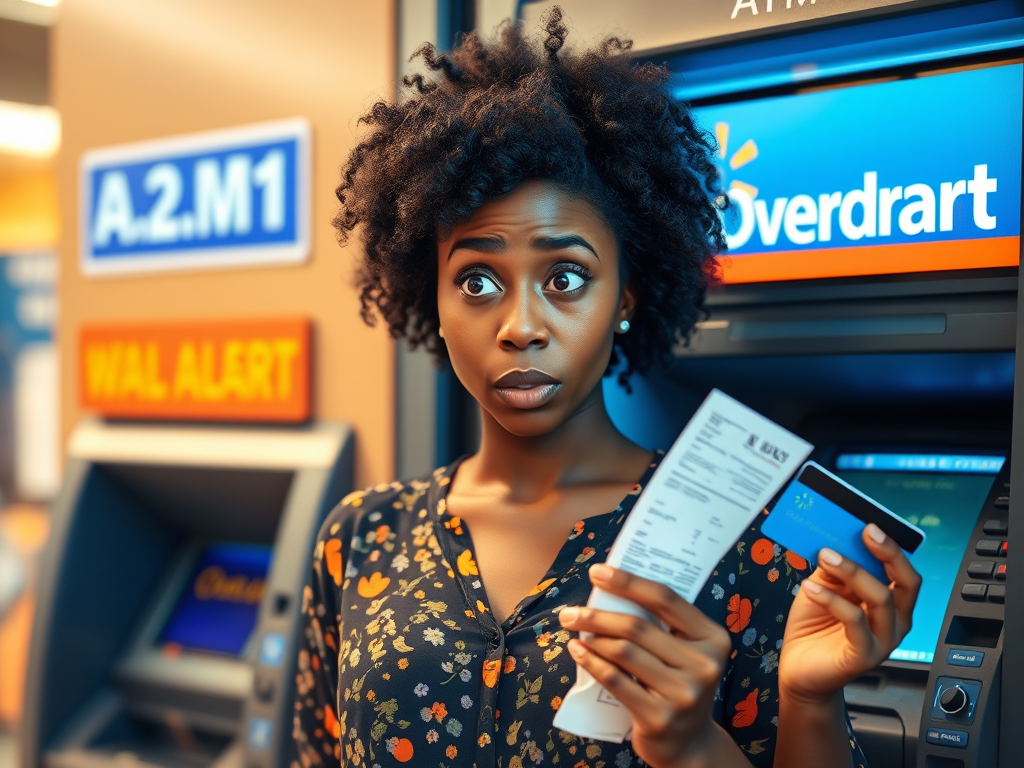
At checkout, the cashier, a cheerful woman with a “Linda” nametag and a smile that screamed “Welcome to Capitalism!” looked at me and asked, “Do you want cash back?”

Now, let me explain something. In my mind, cash back sounded like the American dream. I mean, who doesn’t like free things? “Buy and get cash back”? Say less!

I stared at her in disbelief. “Wait, I can get money? Like… free money?”

She smiled again. “Yes, cash back.”

I didn’t even hesitate. “Yes! Of course. Please.”

“How much?”

I panicked, I didn’t want to sound greedy. “Uhm… $40 is fine,” I said. But the way I pronounced forty instead of forry made us take an extra minute to understand each other. Yooh! The accent was (and still is) very real! 😅

She typed it in. The machine beeped. And boom! She handed me $40 in crisp bills. Just like that.

I smiled the whole way home. America was truly the land of opportunity. They literally give you money for shopping. I even promised myself loyalty: I will never go to any other store. Walmart, my ride or die. 🥹

The Week of Blissful Ignorance

That week, I became a loyal Walmart warrior. Every visit, I’d confidently say “Yes” to the cash-back question. Sometimes $20, sometimes $40 depending on how rich I felt that day.
I started calling it my “side hustle.” My friends would talk about working extra shifts and I’d say,

“Me, I just go to Walmart.”

Life was sweet. I had cash in my wallet, snacks in my pantry, and absolutely no clue what overdraft meant.

Reality Check: When the Bank Fights Back

Then one fateful morning, my bank decided it was time for enlightenment. I checked my balance expecting to see a healthy number. But no. It was negative. In bold red font. My bank even added a sad face emoji (okay, maybe it was my imagination).

I refreshed. Closed the app. Reopened it. Still negative.

That’s when I called customer service.

“Hi, this is Elizabeth,” I said, trying to sound calm.

“Yes, Elizabeth,” replied a polite voice. “How can we help?”

“My account is… um… negative. But I should have cash. Yesterday was my pay day”

The kind lady on the other end checked my account. She politely informed me that my paycheck had come through. It only managed to pay off part of my negative balance. This left me still owing the bank. In shock, I quickly told her that I hadn’t withdrawn or spend more money from the account than I had received. In my head I was like dude am an accountant . That’s when she mentioned the “cash back,” and I eagerly confirmed, “Oh yes, I did that!” completely unaware of the storm I’d caused.

“Cash back,” I said proudly. “I got it from Walmart. They give free money if you buy something and pay with your debit card.”

There was a long pause. The kind of silence where you can literally hear judgment.

Then she said, “Ma’am… that’s not free money. It’s your money. Withdrawn from your account.”

Me: “Wait, what?!”

Her: “Yes. You selected cash back, which debits your account for the amount requested. Your account allows a negative balance when no funds are available to a $…limit as per your instructions”

Me: “So the cash back was… my own money?”

Her: “Yes, ma’am.”

Me: “Even the one from Monday? Tuesday? Wednesday? Thursday?”

Her: “All of them, ma’am.”

At that moment, my soul left my body. I literally hear faint laughter from every cashier who had ever asked, “Do you want cash back?”

Overdraft Fee: The Cherry on Top 🍒

But it didn’t stop there. The kind lady explained that I had withdrawn more than what was in my account. As a result, I was charged an overdraft fee. It was $35 for every transaction that took me below zero and remained unpaid for 72 hours.

I did some quick math and realized my “free cash” had cost me about $210 in fees.
America wasn’t just the land of opportunity; it was the land of financial traps wrapped in politeness.

Lessons Learned the Hard (and Funny) Way

I’ve learned a few important lessons since then:

  • Cash back isn’t cash forward. It’s your own money returning with a smirk.
  • The bank doesn’t forget. You may ignore your account balance, but it’s watching and silently plotting.
  • Walmart will never warn you. They’ll hand you your cash with a smile, knowing you’ll be back next week with overdraft tears.
  • Fresh immigrants need a manual. Seriously, why don’t they issue a “Welcome to America: Avoid These Financial Traps” booklet at the airport?

How I Recovered (Financially and Emotionally)

After I wiped my tears and accepted my overdrafted fate, I did what every immigrant does best. I learned and adapted.

Now I check my account like it’s an exam result. I know my balance down to the last cent.
And whenever a cashier asks, “Do you want cash back?”
I smile sweetly and say,

“No, thank you. I already got cash back from my overdraft last time.”

Sometimes, I even warn other newcomers:

“If you ever think America gives free money, please call me first.”

A Message to My Fellow Immigrants

We come here with big dreams, heavy accents, and light pockets. And America, bless her heart, greets us with overdraft fees, taxes, and 99-cent temptations. But that’s okay. Because every misstep is part of the story.

Someday, I’ll laugh about this from my own house (fully paid off, amen). For now, I’m just that woman who overdrafted her way into financial wisdom.

And Walmart? We’re on a break.
Until further notice.


Signed,
Elizabeth Johnstone Musyoka

Fried, but Wiser.
Breaking Silence: The Impact of Growing Up in Polygamy

The series “Voices of the Child of Polygamy” shares personal and collective experiences of individuals raised in polygamous families. It addresses emotional struggles, identity crises, and mental health issues stemming from these unique backgrounds. The forthcoming book aims to give voice to these underrepresented stories while fostering healing and understanding.

Introducing My Most Personal Series Yet: “Voices of the Child of Polygamy”

No child chooses where to be born.
No child chooses polygamy.

And yet, those who grow up in it often carry the consequences the longest, emotionally, mentally, and silently.

For years, I’ve battled with my own story. The confusion. The shame. The loneliness masked behind obedience and culture. I was raised in a polygamous home. For most of my life, I didn’t even know how much that impacted me. It became apparent when I became an adult trying to make sense of my broken pieces.

This blog series and soon, my book is not just a project.
It’s a release.
It’s healing.
It’s the truth, finally given a voice.


🎙 What to Expect

In this upcoming series, I will:

  • Share my raw, unfiltered experiences growing up in a polygamous family
  • Talk about the emotional cost ,the fake smiles, silent tears, and identity crises
  • Explore mental health struggles often triggered or worsened by childhood confusion
  • Walk you through how I’m learning to cope, heal, and reclaim myself as an adult child of polygamy

But this is not just about me.


🗣 The Voices of Others

This series will also feature the real stories of adults who grew up in polygamous homes. Some were first wives’ children. Others were born into second, third, or even secret families. Their truths are different, but one thing connects them all:

👉🏽 None of them chose the system. But all of them had to survive it.

Some stories will break your heart.
Others might challenge what you thought you knew.
A few may even surprise you with their peace.

This series isn’t about judging polygamy. It’s about finally giving the children ,now adults , the microphone they never had.


A Book Is Coming

This blog series is just the beginning.
A book is on the way.
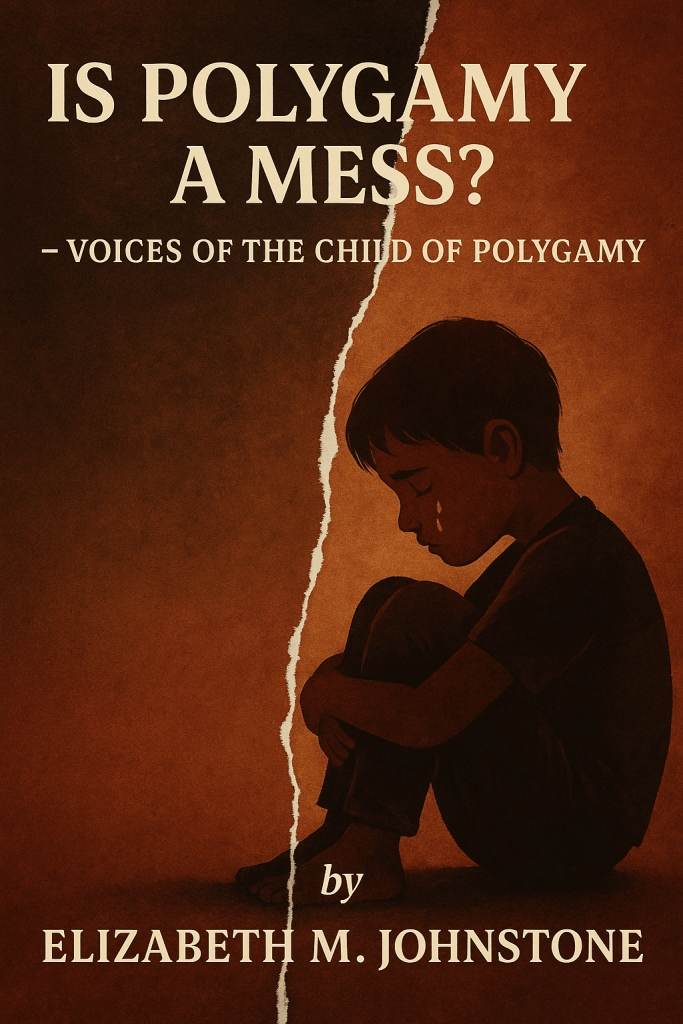
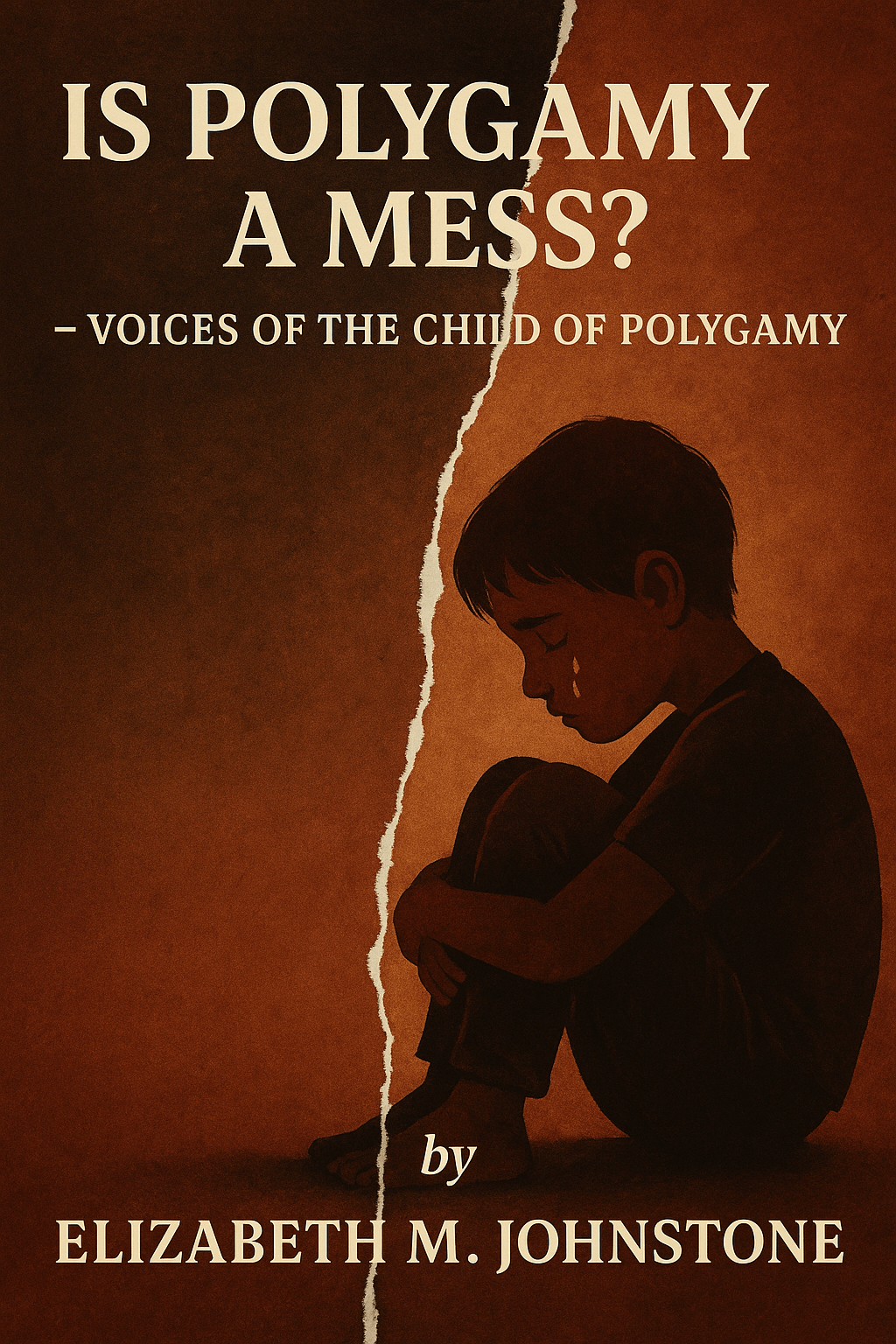
Titled “Is Polygamy a Mess? – Voices of the Child of Polygamy”, it will go deeper. It will explore the emotional layers and cultural silence. It will examine the challenging survival of those who were born into something confusing. We didn’t understand or choose it.


Why I’m Doing This

Because healing begins with telling the truth.
Because culture should never silence pain.
And because there are so many like me who’ve never been asked:

“How did polygamy affect you?”


Stay Tuned

The first chapter drops soon.
Make sure you’re subscribed.
Make sure you’re ready.
We’re about to open a conversation the world too often skips.

This time, it’s the child’s voice , now grown , that will lead.

Wordflow Caring Hearts LLC

“Every life is a story. We care for yours with dignity.”

Is Polygamy a Mess!: Let’s Talk About The Children – A Teaser for my upcoming Blog Series.

The blog and upcoming book aim to highlight the untold struggles faced by children of polygamous families who bear the consequences of their parents’ choices. Through personal stories, the author addresses emotional neglect, rivalry, and the psychological impacts of polygamy, emphasizing the need for change and understanding of children’s perspectives.

“Why focus on the children and not the parents?”
It’s simple. Polygamy is a choice , not an accident or coincidence.
The adults chose it. The children don’t. Yet, it’s the children who carry the consequences the longest.

That’s why I’m telling our story.
💔 Fake smiles. Quiet tears. A childhood shaped by decisions made by parents in bedrooms and boardrooms, but lived by the child.

📖 My blog , and soon my book, is on the way.
It shares my journey as a child of polygamy. It features the raw, unfiltered voices of others who lived it too.
We were once silent. Now grown. Now speaking. Can our voices change the narrative? Well, lets find out soon.

✨Join me in my blog series:
“Is Polygamy a Mess? Voices of the Child of Polygamy”
We’re about to find out.

here is a teaser of what to expect:

Polygamy has been around for centuries, woven into cultural, religious, and sometimes economic narratives. Some call it tradition. Others call it freedom of choice. But no matter how it’s framed, one truth stands out boldly: polygamy is messy , especially for the children involved.

This isn’t a rant. It’s not an attack on anyone’s culture or beliefs. It’s a calm, logical look at the overlooked casualties of this lifestyle. These casualties include the children born into homes shaped more by competition than cohesion.

The Forgotten Stakeholders: Children Born Into Polygamous Homes

When adults enter a polygamous setup, they (at least theoretically) know what they’re signing up for. But the children? They don’t get a say. They don’t choose to be raised in a home split down the middle or sometimes into quarters.

Imagine a household where:

  • Your “siblings” don’t feel like siblings , they feel like rivals.
  • You’re closer to your mother’s side of the family than to your father or his other families.
  • You constantly watch your parents compete for love, resources, and attention.
  • Father is present , but emotionally unavailable or physically stretched too thin.

These aren’t exaggerations. They’re everyday realities.

In 2021, the African Population and Health Research Center conducted a study. It found that children from polygamous households are more likely to suffer from emotional neglect. These children tend to score lower in school. They also have a higher risk of anxiety and depression than those from monogamous homes.

Personal Stories: Real Lives, Real Impact from some correspondents I engaged

From the First Family

1. Miriam, 34
“When my dad married his second wife, I was 9. My mom stopped talking to him, and our home went silent. I started wetting the bed again. Not because I was scared , but because I felt invisible.”

2. James, 41
“We were always told to ‘understand’ because we were the first family. That meant less attention, fewer visits, and fewer gifts. I learned to pretend I didn’t care. But I did. I still do.”

3. Nyambura, 27
“My mom became depressed after the second marriage. She lost interest in everything including us. I was 11, trying to parent my younger siblings while watching my father build a new life next door.”

4. Kelvin, 30
“Dad came home once a week. It felt more like a ritual than love. I remember asking, ‘Why doesn’t he stay?’ Mom said, ‘He has another family now.’ I started believing I was less worthy of being stayed with.”

5. Janet, 36
“Our birthdays were never celebrated if they clashed with the second family’s events. It taught me early that my joy was conditional and usually second place.”

From the Second Family

6. Diana, 29
“Growing up, I always felt like the cause of another woman’s pain. My mom was the second wife, and people treated us like homewreckers. Schoolmates whispered. Church folks stared. I grew up feeling shame I didn’t create.”

7. Musa, 25
“I saw more fights than hugs in our house. My mom always argued with Dad about the first family ,the money, the time, the favoritism. I was 10 when I decided marriage wasn’t worth it.”


From Extra-Marital Affairs

8. Salome, 38
“He was never fully ours. He had a ‘real’ family. We were the secret family. Every time he visited, it felt like we were borrowing someone else’s father. That messes with a child’s sense of belonging.”

9. Brian, 33
“People called me a ‘mistake.’ My siblings from the legal family never accepted me. I spent most of my life trying to prove I existed not just legally, but emotionally.”

10. Esther, 31
“My mom thought she was the last woman, but he kept adding more. I was the child of the side chick who got replaced. I’ve battled abandonment issues for most of my life and I didn’t even know why until therapy.”

11. Faith’s Story – Age 27

“Growing up, I never really knew my dad. He lived with his other wife. We were the ‘other children.’ Every school event, it was just Mom. Even when he came, he favored my step-siblings. We felt like second-class kids in our own home.”

Faith isn’t bitter — she’s just honest. Her story isn’t unique. Children raised in these homes often grow up with emotional gaps they struggle to fill in adulthood.

Daniel’s Story – Age 34 (Nigeria)

“My siblings and I are close now , but as kids? We fought constantly. Our moms never liked each other, and that filtered down to us. Our dad? He avoided conflict by staying silent. Silence was his parenting strategy.”

So Who’s to Blame? A Calm Breakdown

Let’s look at the key players , not to shame, but to understand. They say it takes two to tango. In my own words, when it comes to polygamy, it takes three parties to tango. These parties are the man who chose polygamy. The first wife chooses to stay. Lastly, the subsequent wives who came in knowing what they are getting into. I will briefly discuss this since ill talk more in my upcoming series, this is just a snippet.

1. The Man Who Chose Polygamy

Let’s be real , he built the system. Whether by culture, religion, or personal desire, he made the decision to divide his love and presence. Most polygamous men don’t have enough emotional intelligence, financial resources, or time to maintain equity across multiple households.

Quote to remember:

“You can marry more than one woman, but you only have one heart and 24 hours a day.” Anonymous counselor in a 2022 BBC Africa documentary on polygamy.

2. The First Wife Who Stayed

This part is hard. Some stay because they feel financially or culturally trapped. Others stay for the children, regardless of the situation, continued participation means becoming part of the system.

Some first wives endure quietly. Others become emotionally unavailable or bitter. They usually pass that pain to their children without meaning to.

A wise person once said: “Children don’t need a perfect home. They need emotionally present parents. Bitterness, even when justified, suffocates a child’s sense of security.”

3. The Other Women Who Came In

Entering polygamy knowingly means becoming part of a complex dynamic. Whether for love, survival, or belief, these women must understand they are not just marrying a man. They are inheriting a legacy of emotional tension. They definitely will face potential resentment.

Unfortunately, in many households, favoritism becomes inevitable. And when women pit their children against each other directly, the psychological toll is enormous. Indirect competition also affects the kids significantly.

It’s Not About Judgment , It’s About Consequences

Some people argue, “Polygamy works when done right.” Sure , in theory. But how often is it actually done right? Without jealousy? Without favoritism? Without emotional absenteeism?

That’s like saying, “War can be peaceful if nobody shoots.” In real life, there’s always shooting , and in polygamy, the children often take the hit.

What some Research Says

  • Harvard’s Center on the Developing Child notes a correlation between high-conflict homes and emotional regulation struggles in children. These children often face challenges in regulating their emotions. They also find it difficult to trust and maintain long-term relationship stability.
  • A 2022 Nigerian social welfare report revealed findings on children’s emotional well-being. Children in polygamous families scored 33% lower in emotional well-being indicators than those in monogamous homes.
  • In Kenya, Family Law experts have noted a rising number of adult siblings from polygamous homes fighting over inheritance. This issue is a result of poor planning. It also stems from unresolved childhood resentments.

So, Is It Always a Mess?

Not always , but often. Especially when:

  • The man lacks emotional maturity ,time and importantly finances.
  • The women compete instead of co-parenting.
  • No one puts the children first.

If polygamy worked like a peaceful cooperative? Maybe. But for most, it’s like running multiple families with a split budget, split attention, and a fractured emotional core.

Before You Consider Polygamy… Ask Yourself:

Would you want to be a child in that setup?

Would you want to feel half-loved? Half-seen? Half-important?

If the answer is no , then maybe it’s not the setup we should be defending or romanticizing.

Final Thought:

Polygamy isn’t just about how many wives a man can have. It’s about how many whole, healthy children that system can raise , and that’s where the math often fails.

No child chooses where to be born or raised.
But the consequences , whether good or bad , echo into adulthood.
I am telling my story and that of a million others!

Blog Drops soon!!!!!!!

#TheChildDidn’tChoose #PolygamyUnmasked #ComingSoon #RealStories #HealingOutLoud

“Every life is a story. We care for yours with dignity.”

Welcome to personal story telling

Welcome to the heart of Wordflow Studio — where words are raw, reflective, and real.

This section holds the pieces closest to my heart — honest stories drawn from life’s most beautiful and brutal moments. If you’ve ever felt lost, found, or in between, these words are for you.

free-pen-ready-to-do-the-writing